The Pillow Lab
I map pillow pressure. Here's what I've learned.
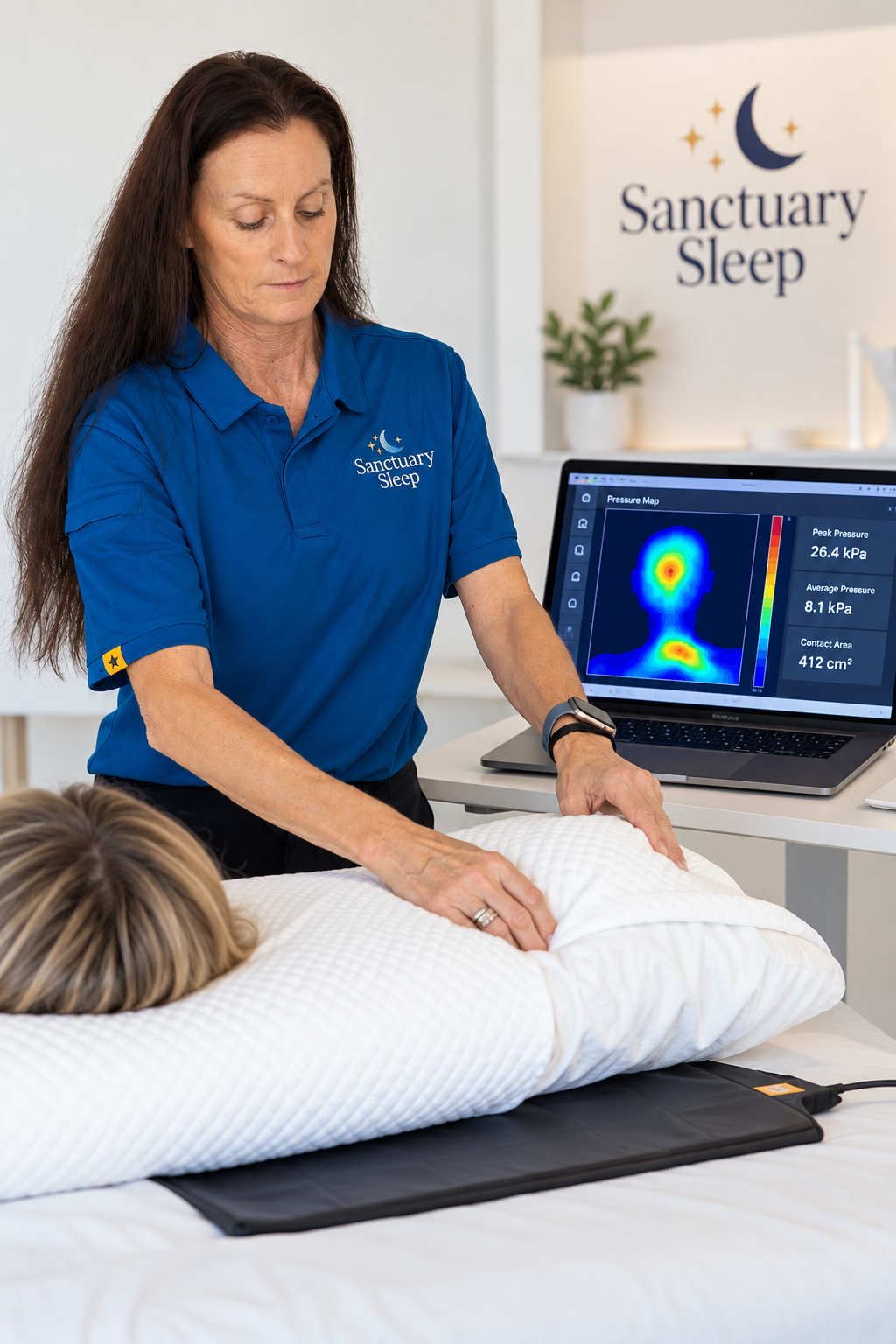
A massage table, a pressure-sensing mat, and a laptop. That's the whole setup — and it shows in seconds how your head and neck actually load a pillow. Instead of assuming what a pillow does for someone, look at what's actually happening when a real person lies down on one.
What is the Pillow Lab?
It is exactly what it sounds like: a massage table, a pressure-sensing mat, and a laptop. Lie down and it shows in seconds how your head and neck load a pillow. A session takes about five minutes, and each person gets a personal report.
What have I noticed?
Bigger builds often show the head and neck sinking together, while others concentrate load under the back of the head. That observation is why Crown Lift comes in more than one support level. These are observations from sessions, not clinical findings — I record them as questions as often as answers.
Who do I bring it to?
Community groups, myofunctional therapists, PTs, CPAP and airway specialists, sleep dentists, and wellness events around Charlotte.
What's next?
A smaller, head-sized mat for clinical and research use. Every session starts from the same question: what does your pillow setup actually look like under load?
What we look at
The variables the Pillow Lab is paying attention to
- Head support
- How much lift sits under the head, and where it sits.
- Neck contact
- Whether the neck is actually touching the pillow at all.
- Pressure distribution
- Where load concentrates versus where it spreads out.
- Contact area
- How much of the head and neck is in contact with the surface.
- Pillow height
- Loft measured as it behaves under a real head, not on a shelf.
- Sleep position
- Back, side, and the in-between positions people actually use.
- Individual anatomy
- Shoulder width, neck length, body proportions.
- Adjustable support
- What changes when lift can be tuned to the person.
- Back vs. side
- How support needs shift between the two positions.
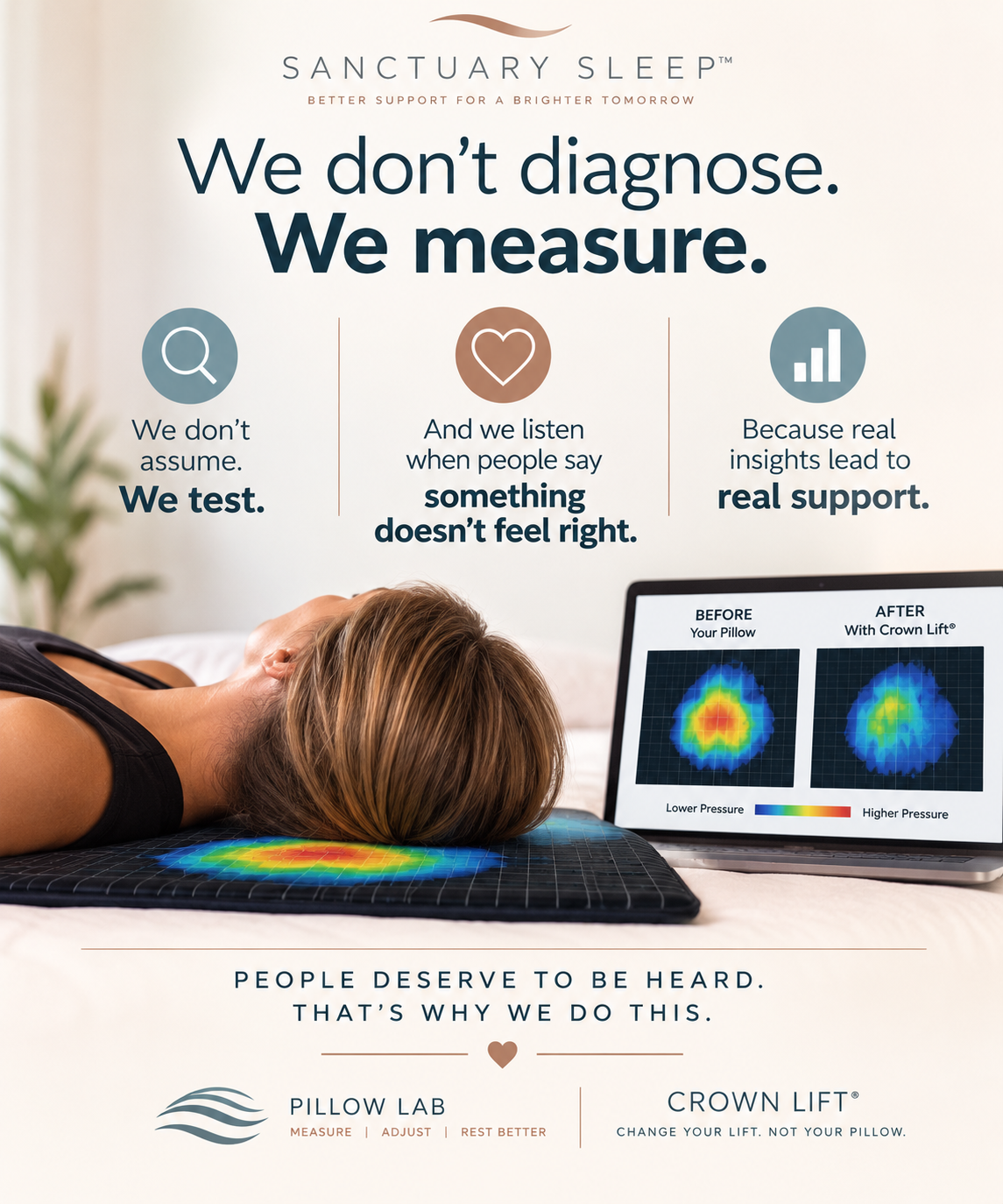
We don't diagnose. We measure.
We don't assume. We test.
And we listen when people say something doesn't feel right.
How a session works
- 01
Someone brings in their own pillow, or uses one we have.
- 02
They lie down the way they normally sleep — not the way a photo shoot would stage it.
- 03
We record contact and pressure distribution, and note height, position and anatomy.
- 04
We change one variable at a time: position, loft, or the lift underneath the head.
- 05
We compare, and we write down what we saw and what we still don't understand.
What this is, and isn't
This is observational work by an independent inventor. It is not a clinical study, and I won't present it as one. There are no participant counts, statistics or outcomes to report here yet — when there are real results, they'll be published with their methods attached.
Coming to this page
- Pressure map examples with plain-language explanations
- Short testing videos and demonstrations
- Running observations and open questions
- Study information and methods, once studies exist
- Datasets and results, published with their limitations
- Clinician and industry collaborations
Book a session
See your own pillow under load
Sessions take about five minutes and you leave with a personal report. I bring the Pillow Lab to community groups, clinics and wellness events around Charlotte — or tell me where you are and we'll find a way.
Prefer email? Use the contact page and choose "Pillow Lab collaboration".
Important
The Pillow Lab is for education and pillow fitting, not diagnosis. Pressure maps shown here illustrate contact and load distribution. They are not diagnostic, and nothing in the Pillow Lab should be read as treating sleep apnea, snoring, neck conditions or any other medical condition. If something hurts or your breathing concerns you, please talk to a qualified clinician.